Should Apple Be Afraid of the Claude AI App Creating Its Own Apps on the Mac?
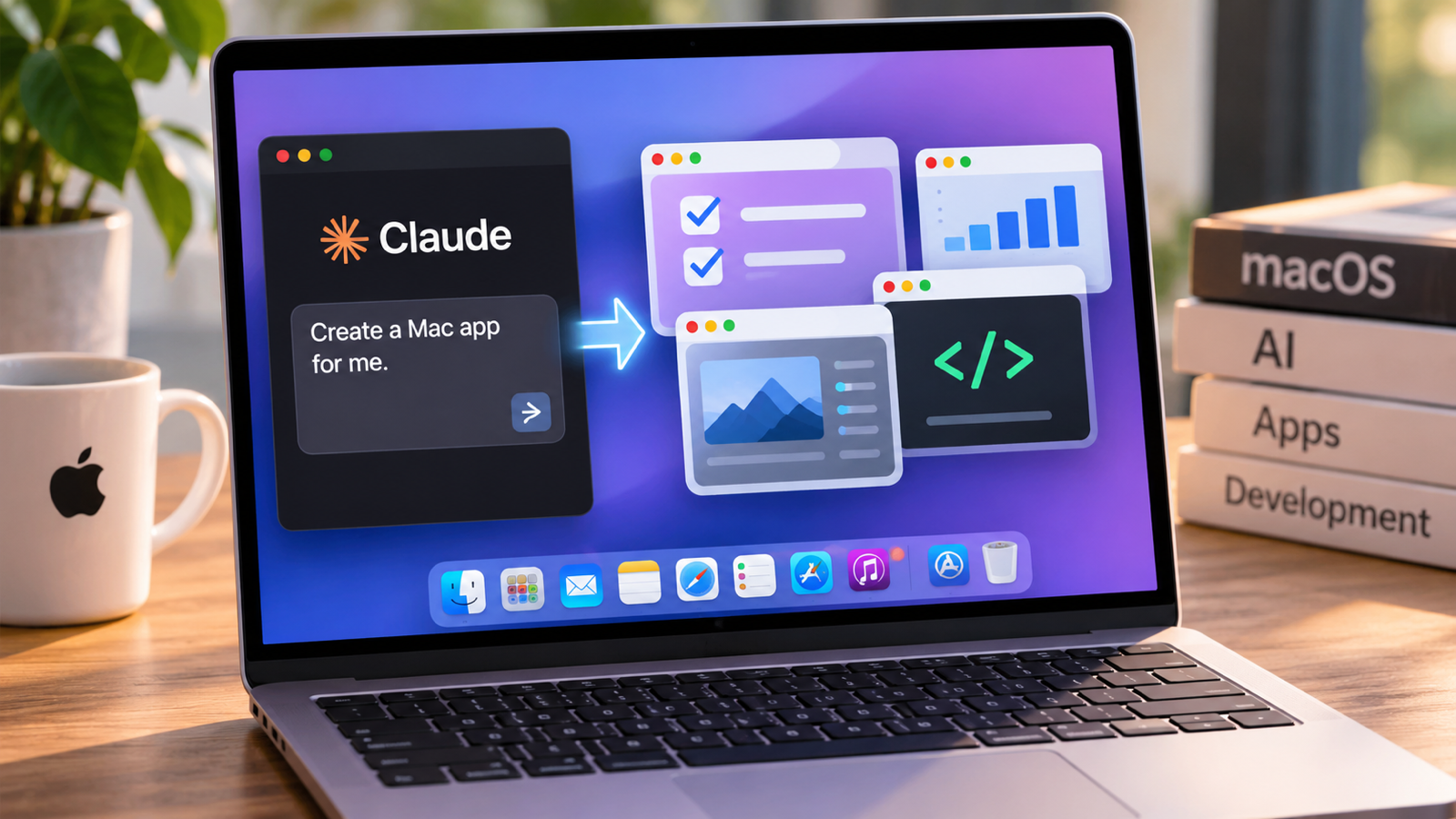
Recently, Anthropic’s AI app, Claude, began allowing users to create applications that run on Macintosh computers as well as Windows PCs. Anthropic explains how this works here. In particular, the Artifacts that run inside Claude can now also run as standalone apps on a Mac or Windows computer.
Could Claude’s Apps Threaten Apple’s Ecosystem?
Over at MacStories, Federico Viticci believes this development could be a big problem for Apple. He states:
Before I get into the technical details, let me say this upfront: if I were Apple, I’d be very concerned that Anthropic is now shipping a nicely packaged system for users to make whatever app they want and turn Apple’s ecosystem into Claude’s ecosystem of tools and mods on their computers.
(MacStories)
According to Viticci, Anthropic isn’t creating these apps using Swift, the programming language Apple uses to develop native Mac applications. Viticci explains:
Crucially, these are not native apps created with Swift or SwiftUI: they’re HTML apps, wrapped inside an Electron shim, which is entirely managed by Claude’s Chromium process for Electron. (MacStories)
So, should Apple be very worried that Claude can create its own ecosystem of apps on the Macintosh?
The Mac Has Always Been an Open Platform
I don’t think so.
Remember, the Macintosh, unlike the iPhone and iPad, is a relatively open platform. You don’t have to go through Apple’s App Store to download applications. You can download all sorts of apps directly from websites.
Moreover, because macOS is based on UNIX, users can even replace macOS with Linux if they want. Back when Macintosh computers used Intel processors, users could also run Windows on their Macs.
The Mac has always given users considerably more freedom to install and run software from different sources.
Claude Can Also Create Native Mac Apps
It’s also worth remembering that, since earlier this year, Anthropic’s Claude app has been able to create Swift-based applications and even use Apple’s Xcode development environment to build native Swift apps.
In other words, Claude isn’t limited to creating HTML-based applications that run inside Electron. It can also help users develop applications using Apple’s own development tools.
How Much Revenue Could Apple Actually Lose?
So, how much revenue might Apple lose by allowing Claude to create its own ecosystem of applications on the Mac?
I suspect Mac users who create their own applications with Claude might purchase fewer apps from Apple’s Mac App Store. That could mean less revenue for Apple from Mac App Store sales.
However, I think this represents a minuscule portion of Apple’s total revenue. Apple makes most of its money selling devices and related services, not from selling Mac applications through its App Store.
Furthermore, Apple has allowed plenty of other technologies to run on the Mac that could reduce the number of applications users purchase through the Mac App Store.
Consider Apple’s own Shortcuts app. Shortcuts allows users to automate tasks and essentially create their own tools to perform various functions on the Mac, iPad, and iPhone.
For years, my favorite Mac automation application has been Keyboard Maestro. You can’t purchase Keyboard Maestro through the Mac App Store, but you can download it directly from the internet at Keyboard Maestro’s website. Keyboard Maestro allows you to create all sorts of automated macros, which arguably function much like small applications.
Moreover, when Apple introduced Macs with its M-series processors, it allowed users to run compatible iPad apps on their Macs. That, too, could reduce the number of applications users purchase through the Mac App Store.
In other words, Apple has a long history of allowing technologies and applications outside its own App Store ecosystem to run on the Mac.
Apple’s Bigger Concern May Be Security
Security, however, might be a different matter.
Apple may not like everything Anthropic is doing with its Claude app on the Mac, particularly when it comes to how AI applications interact with the operating system and other applications.
As John Gruber ably pointed out on his blog, Daring Fireball, Apple is strengthening security in macOS so users can better control which parts of the operating system and their applications AI models, such as Claude and ChatGPT, can access.
I think this is a much bigger issue for Apple than whether Claude can create its own collection of Mac applications.
As AI becomes more capable of interacting with our computers, users will need better ways to control what these applications can see and do.
Apple Probably Won’t Try to Stop Claude
I don’t think Apple is going to push back aggressively against Anthropic to prevent its Claude app from creating applications for the Mac.
Apple cares much more about the iPhone and iPad ecosystems. For many years, it has allowed Mac users to install and run all sorts of applications that don’t come through the Mac App Store.
Claude creating its own ecosystem of applications on the Mac is simply another example of the flexibility that has always made the Macintosh different from Apple’s more tightly controlled mobile platforms.
Rather than viewing Claude as a major threat, I think Apple should see it as another development in the evolution of the Mac as an open computing platform.